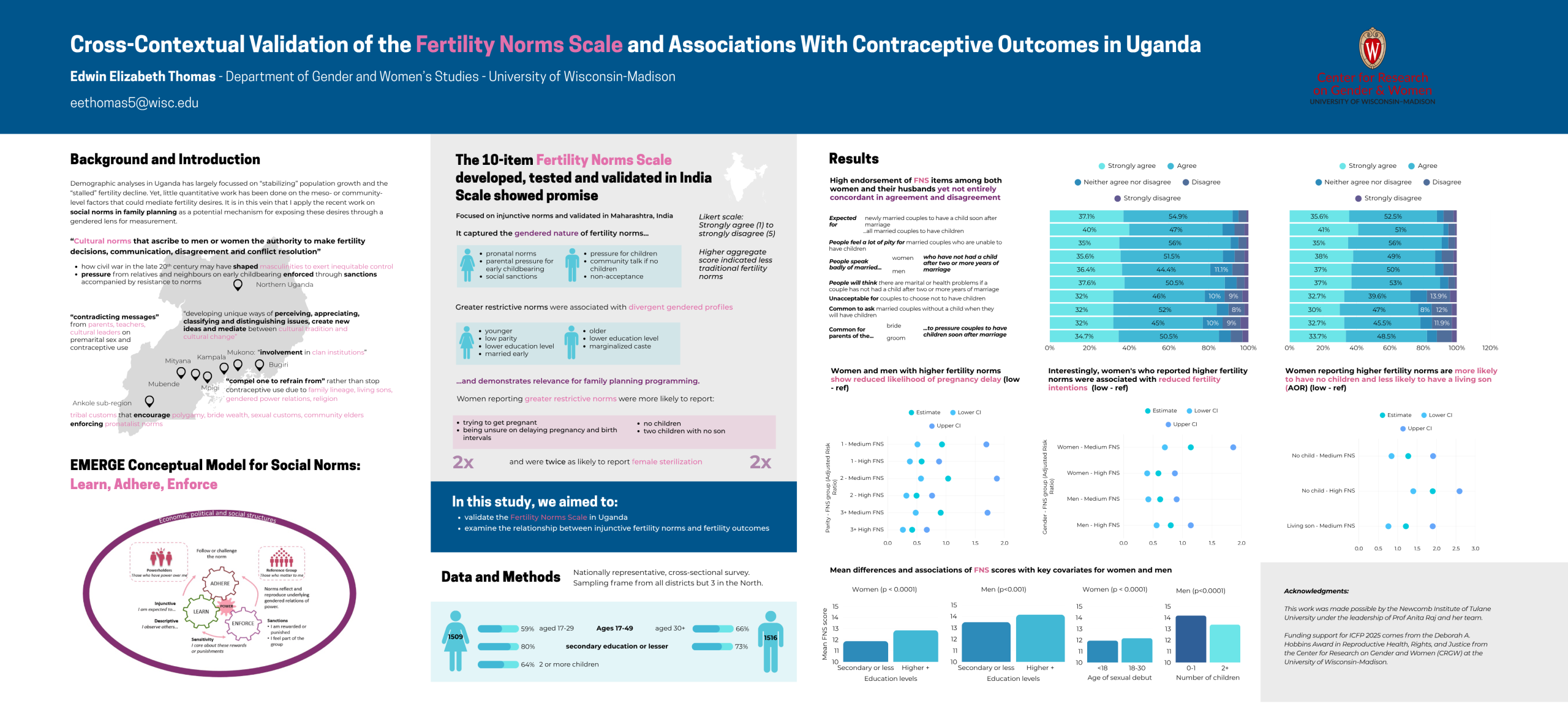
Cross-Contextual Validation of the Fertility Norms Scale and Associations with Contraceptive Outcomes in Uganda by Edwin Elizabeth Thomas
MEDIUM: Poster, Data Visualization
DESCRIPTION:
This poster presents a cross-contextual validation study of the Fertility Norms Scale (FNS) in Uganda. The research validates a 10-item scale originally developed and tested in India that measures restrictive fertility norms – cultural beliefs that ascribe authority over fertility decisions to men or women through sanctions like community talk, quarreling, and conflict resolution. Key findings include, high endorsement of restrictive fertility norm items among both women and men in Uganda, with strong concordance in agreement/disagreement patterns, gender differences with women reporting higher fertility norms showing reduced likelihood of pregnancy delay and lower parity, while men with higher norms had increased likelihood of higher parity, and higher restrictive norms being associated with reduced likelihood of having a living son and lower age at sexual debut for women.
The study uses data from a nationally representative cross-sectional survey in Uganda and employs the “Learn, Adhere, Enforce” conceptual model for understanding how social norms operate. The research demonstrates the FNS’s relevance for family planning programming in Uganda and confirms that restrictive fertility norms are associated with key reproductive health outcomes, including pregnancy timing, parity, and fertility intentions.