What Does a Consultation Look Like?
At DesignLab, we believe that design is collaborative. Whether that means working as a team to accomplish shared goals or working on an individual project and soliciting feedback from others, design should always involve more than one individual.
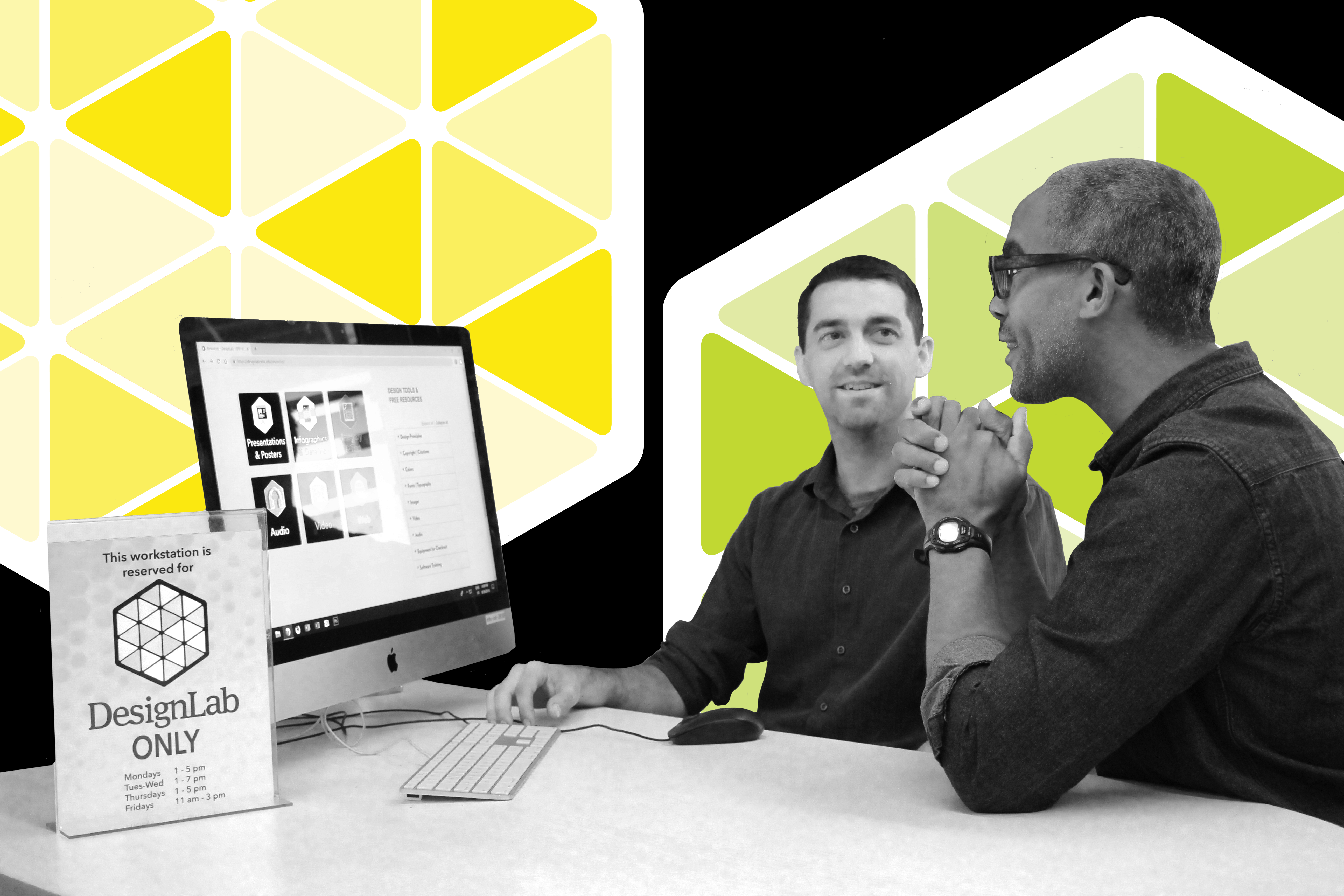
Consultations are typically one-on-one or in small groups. We want your consultation to feel like a conversation, where we will ask you questions and we expect you to ask us questions.
Below are example types of consultations we see in DesignLab, with some common questions:
These consultations usually happen early on in a project. Questions about brainstorming content often include:
- I don’t know where to start. Can you assist me?
- What sort of software should I be using to make this?
- What should I include in my project?
- How should I organize my ideas?
- How do I narrow down my focus?
- How do I avoid common mistakes before it is too late?
These consultations usually occur in the middle stages of the project or near the end. Questions in these consultations often include:
- How does the layout look?
- Does this layout/form/content make sense?
- Have I chosen good colors? Fonts?
- Is the size ok?
- What suggestions do you have for improvement?
- Video, in particular:
- Should I add more B-roll?
- Is the framing ok?
- Is the white balance good?
- Audio and/or Video:
- Are the sound levels good?
- Is the audio clear/clean?
- Are the transitions smooth?
We can also help you with the following topics and provide resources for you to learn more:
We can talk you through accessibility-related issues related to visual and hearing impairments, as well as color blindness. We will provide recommendations, but we often refer patrons to the McBurney Center for complex accessibility questions. Questions about accessibility include:
- Do I need to make this accessible?
- Is the contrast appropriate for color-blindness? For visual impairments?
- How do I add closed-captioning to my video?
- How do I make my PDF / Website / PowerPoint accessible for screen readers?
- How do I make a transcript for my audio project?
While we do not provide legal advice, we can provide context on fair use policies and recommend ways to avoid digital copyright concerns. We can also refer you to the UW-Libraries Scholarly Communication Office for more details. Questions about digital copyright often include:
- How do I cite this?
- Can I use [ X ]?
- Is this transformative enough to be considered fair use?
- Where can I find free b-roll or stock video? Music? Images? Fonts?
- What are the policies for YouTube video uploads?
While we can help with some technical questions, we often refer these to our partners at Software Training for Students, who have advanced knowledge of a variety of software programs. Questions of this nature are along the lines of:
- How do I do [ X ] in this software?
- Is it possible to do [ X ] using this software?
- This software is not doing what I want/need. Can you help?